
BIS mark
Identifies the official Indian hallmarking system.
A practical guide to hallmarks, purity and valuation—so you can review every number with confidence before you sell.
For HUID-based hallmarked gold jewellery, look for these three identifiers on the article.
Identifies the official Indian hallmarking system.
Shows the karat grade and gold content in parts per thousand.
A unique alphanumeric identifier that can be checked in the BIS Care app.
Karat describes the proportion of gold in an alloy. Fineness expresses that proportion in parts per thousand. The stamped grade helps you recognise what an article claims; professional testing confirms its actual purity.
Compare Today's RatesStandard gold
High-purity jewellery
Traditional jewellery
Durable jewellery
Fine jewellery
Everyday jewellery
Stones, clasps and non-gold parts are separated from the payable gold weight.
Testing establishes the actual gold content instead of relying only on appearance.
The applicable per-gram rate provides the starting point for the valuation.
Any eligible charges should be explained before you accept an offer.
A little preparation makes the valuation easier to follow and gives you a cleaner record of the offer.
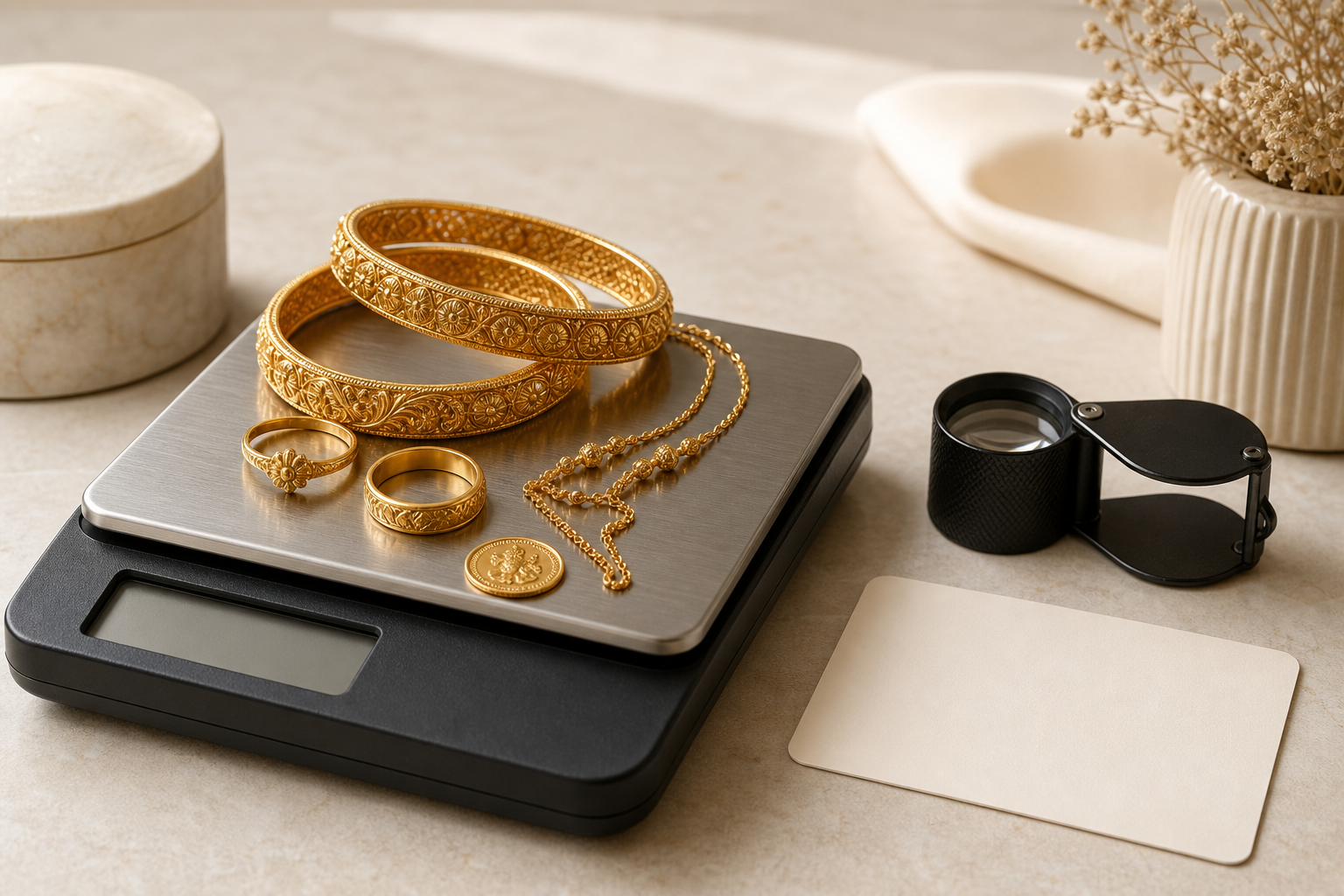
Group your jewellery, coins and bars so every item can be weighed clearly.
Keep a valid photo ID ready and bring the purchase invoice if you still have it.
Check visible hallmark details and verify the HUID in the official BIS Care app.
Ask for the tested purity, net gold weight, applied rate and deductions in writing.
Review the final offer at your own pace before deciding whether to sell.
BIS states that consumers can sell old hallmarked or unhallmarked jewellery, request testing from a BIS-recognised Assaying and Hallmarking Centre, and verify a hallmarked item's HUID through the BIS Care app.
See the rate, weight, purity and final offer before you decide.
Get Started